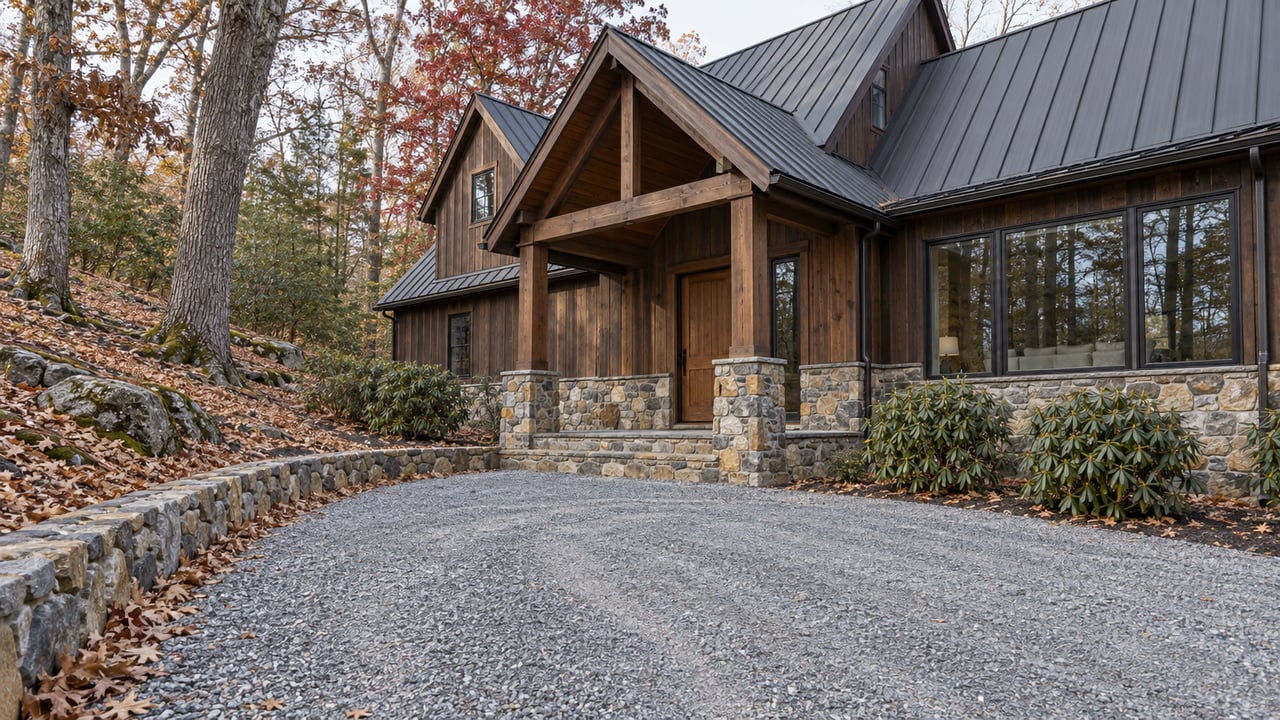
Fannin County Opted Out of Georgia's Homestead Cap. A 2026 Law Took That Choice Away.
November 5, 2026
November 5, 2026
Fannin County's 2026 property tax bills are already in mailboxes, and they are due December 20. The combined county and school rate is 8.918 mills, down from 9.073 last year. A bigger change for Fannin owners came in May, when the Georgia General Assembly's HOME Act removed the opt-out that Fannin County, its school board and all three of its cities had used in early 2025.
The result matters to anyone comparing a full-time home with a weekend cabin or a rental. Starting with the 2027 tax year, a homesteaded primary residence in Fannin County gets a limit on how fast its taxable value can rise. A second home or vacation rental does not. Two similar houses on the same gravel road, with the same view and the same rate, can start to separate on the tax bill because of who lives in them and how much of the year they spend there.
Here are the two levies that make up the countywide rate, as advertised before this summer's adoption votes:
| Levy | 2025 | 2026 |
|---|---|---|
| County M&O | 2.44 mills | 2.401 mills |
| Board of Education | 6.633 mills | 6.517 mills |
| Combined | 9.073 mills | 8.918 mills |
The Fannin County Board of Commissioners adopted the combined 8.918 rate on August 25, 2026. Both the county and the school board took a full rollback, which means each set its rate at the level that brings in about the same revenue as the year before once higher valuations are taken out. They did the same in 2025.
Blue Ridge Georgia Community Website ran the numbers. With no exemptions, a $300,000 home is assessed at $120,000, which is 40 percent of fair market value. That works out to about $1,088.76 at last year's rate and about $1,070.16 at this year's, a difference of roughly $18.60. The same report explains how a rollback can still raise a bill: if a parcel's assessed value climbed faster than the county average, its owner can owe more at a lower rate. "The rate is countywide. The value is parcel by parcel."
So in Fannin County, the size of a bill depends mostly on the value side, not the rate. That is the side the HB 581 cap limits.
HB 581, passed in 2024, created a statewide floating homestead exemption. It holds back yearly increases in a primary residence's assessed value to the rate of inflation. Local governments and school districts were given a short window to opt out. In Fannin County, every taxing body did. The Georgia Secretary of State's HB 581 opt-out list shows these filings:
Because of those filings, a full-time Fannin homeowner's assessed value could move with the market in 2025 and 2026, just like a second home's. Occupancy mattered only through the flat dollar exemptions, which reduce assessed value by a fixed amount no matter how fast the market moves.
Governor Brian Kemp signed Senate Bill 33, the Homeownership Opportunity and Market Equalization (HOME) Act of 2026, on May 11, 2026. The Georgia Senate Press Office reported that it caps annual increases in homestead assessments at the rate of inflation "for all counties, cities, consolidated governments and local school districts beginning in 2027." It also closes the loophole that had let local governments opt out. The legislature's official summary lists the law as Act 461, effective May 11, 2026.
The Association County Commissioners of Georgia explains the transition in its 2026 legislative update. Jurisdictions that had opted out "are now subject to it, prospectively," and "the base year is the year prior to the first applicable year of the homestead exemption for that jurisdiction." If the cap starts here in 2027, the year before is 2026. That points to this year's assessed values as the starting line for Fannin homesteads, the same values that appeared on the notices mailed in May and on the bills due December 20.
The same law creates a Local Homestead Option Sales Tax, or LHOST. It is a 1 percent sales tax a county could use to fund extra homestead relief, but it only begins after local voters approve a homestead exemption that authorizes it.
The SB 33 bill text sets out the mechanics. Here is how they apply to one homestead, step by step:
The Georgia Department of Revenue publishes the inflation figure every year. For the 2026 digest year, DOR's bulletin set it at 2.7 percent, based on December 2025 inflation. That is the scale the cap works at. In a year when a mountain home's market value rises faster than a few percent, the homesteaded owner's taxable value rises more slowly than the market, unless the owner adds a screened porch or a bunk room.
Point four is the one that matters at closing. A buyer does not inherit the seller's capped base. Under the statute, the new owner's starting value is the assessed value from the year before their own exemption begins. A house that has been homesteaded for years can carry a much lower taxable value than the same house will show on the buyer's first homestead bill.
The cap applies only to a homestead, meaning an owner-occupied primary residence. Rentals and investment property are not covered. A weekend cabin above Lake Blue Ridge or a short-term rental near Aska Road keeps the assessment method every Fannin property had in 2025 and 2026. Assessed value follows fair market value at 40 percent, and the countywide rate applies to all of it.
Since 2025, then, the change runs in one direction. The rate is still shared by every property in the county. From 2027 on, the value side splits by occupancy: homesteaded houses grow no faster than inflation, and everything else grows with the market. A second-home buyer who compares two Fannin properties by their current tax bills is comparing numbers that could be set on different rules within a year or two. That includes a property's own history if the seller lived there full time.
For a retiree moving here full time, the flat exemptions still stack on top of the cap. The Fannin County Tax Assessor's forms page lists these:
The listed deadline for both is April 1. The Fannin County Tax Commissioner notes that the homestead exemption is for a primary residence, the application is filed with the Tax Assessor, and exemptions are subtracted from assessed value before the mill rate is applied.
A separate 2026 law, SB 566, changes paperwork that every Fannin owner will see. Starting with tax year 2026, assessment notices show last year's value, this year's value, what changed, and which exemptions were applied. Tax bills break out the amount owed to the county, the school system and any city. The law also lets a taxpayer file a homestead exemption at any point until the appeal window closes, 45 days after the annual assessment notice, though ACCG notes this "does not change timing for eligibility."
Here is the local schedule. Assessment notices usually go out in May. Bills are mailed in mid-September after the digest is approved. Payment is due December 20. For this cycle, the 45-day value appeal window has already closed. Because the cap is tied to the applicant and the base is the year before the exemption is first granted, the timing of a primary-home purchase and its homestead filing helps decide which year's value becomes that owner's starting point. That is a good reason to talk it through with a tax professional before closing.
Does the cap lower my bill this December? The Senate's announcement puts the start of the statewide cap in 2027. The 2026 bill reflects the 8.918 combined county and school rate applied to this year's assessed value, less any exemptions.
Does it apply inside the Blue Ridge, McCaysville and Morganton city limits? SB 33 covers counties, cities, consolidated governments and school districts, and all three cities appear on the 2025 opt-out list that the law overrides.
Will a vacation rental ever qualify? The floating exemption is limited to a qualifying homestead, an owner-occupied primary residence.
This is general information, not legal, tax or financial advice. Please confirm how these rules apply to your own property with the Fannin County Tax Assessor, a tax professional or an attorney.
When a weekend cabin and a full-time home are taxed on different rules, the right property depends on how you plan to live in it. I'm happy to walk through a property's assessment history and exemption status with you before you write an offer. Let me be your guide. Start your Blue Ridge search with Kim Knutzen.
Stay up to date on the latest real estate trends.




Knowing what buyers are looking for helps Kim with getting the seller's property ready for market. Whether you are looking to buy a second home or sell a rental investment property, Kim specializes in leveraging her local Blue Ridge expertise to get you top value.