Fannin County's Proposed Environmental Protection Ordinance: What to Know
September 10, 2026
September 10, 2026
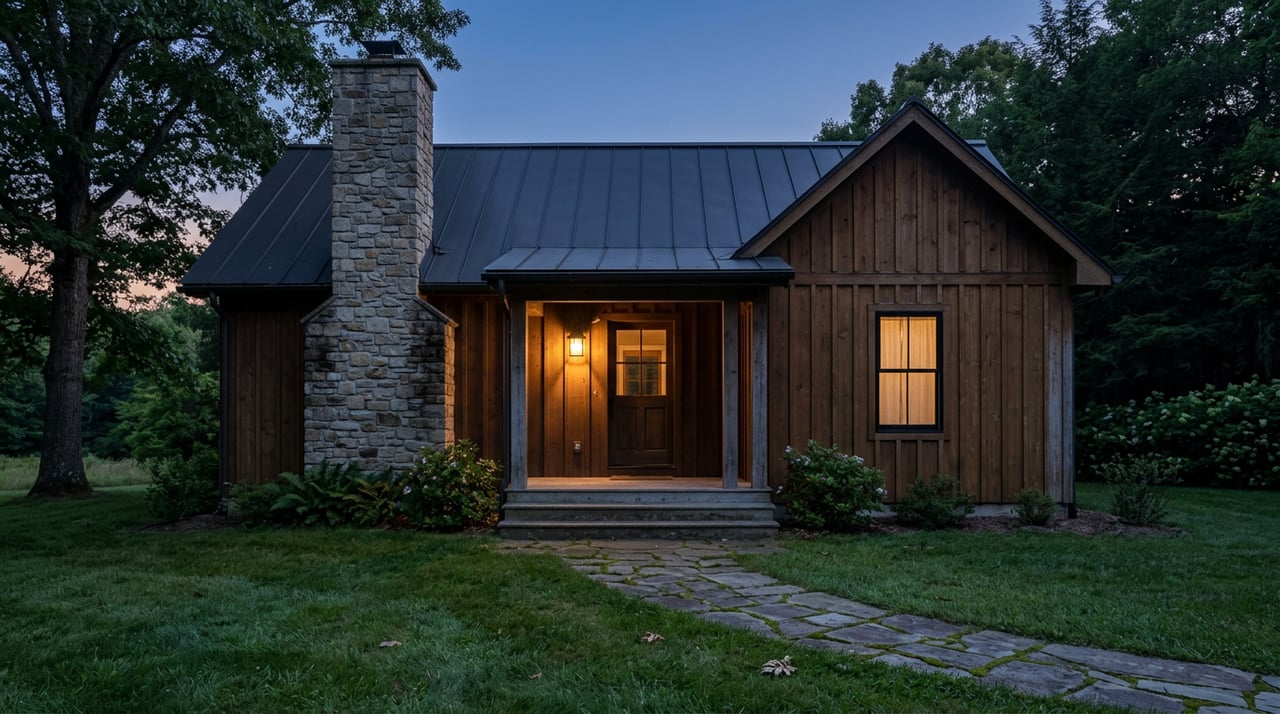
In its account of the Fannin County hearing, Citizen Portal quoted the ordinance's intent: "It is the intent of this ordinance that residential and commercial lighting does not disturb the neighboring properties and further does not disturb or disorient native animals, migrating birds, and insects."
A county staff member named Miss Woody read that sentence into the record for the Fannin County Board of Commissioners during a public hearing in the Jury Assembly Room on the third floor of the courthouse at 400 West Main Street. The discussion included string lights, a Saturday-night speaker, late fireworks, and cryptocurrency mining.
Here is what was on the table, why commissioners tabled the draft, and what you should check before assuming either the existing rules or the draft applies to your property.
Fannin County has carried an Environmental Health and Habitat Protection Ordinance for years, filed on the county's own ordinances page alongside a separate Noise Ordinance. Neither one said much about porch lights or decibels at a property line. This is a county where the Chattahoochee-Oconee National Forest runs along the southern edge and small farms with horses and outbuildings are scattered through the unincorporated acreage, so the gap between what the old ordinance covered and what people actually deal with after dark had been growing for a while.
In August 2025, county staff brought commissioners a rewrite that would fold the habitat rules, the noise ordinance, new fireworks restrictions, and a first-ever ban on cryptocurrency mining into one measure, renamed the Environmental Protection Ordinance. Commissioners heard it on August 12, 2025, again on August 26, and a third time on September 9, 2025. The proposal came before commissioners in three public hearings in under a month, and it drew public comments.
The draft, as read into the record across those sessions, would have done the following:
The equine buffer is the kind of detail that only makes sense once you picture the county's actual geography. This is a place with working farms and boarding barns tucked between mountain lots, not a suburb, so a fireworks rule written around distance from horses is a rule written for the county that exists rather than a generic template pulled off a shelf. The lighting recommendation came from the same place. Residents who spoke at the hearings told the board they had been using guidance from Dark Skies International to draft suggested language, and asked that the shielding and warm-bulb standards apply to commercial lighting as well as homes, not just porches and driveways.
The cryptocurrency mining ban was also included in the draft, alongside provisions on habitat, lighting, noise, and fireworks. The public record cited here gives no explanation for the mining provision beyond its inclusion.
Public comment at the September 2025 hearing pushed for something more specific than "does not disturb." One commenter proposed a daytime noise limit of about 65 decibels at the property line, dropping to 60 at night. Others pressed for the same kind of clarity on fireworks timing rather than language that leaves the standard up to interpretation.
Commissioners did not adopt either figure. The board's own record of that meeting shows no final adoption occurred and no numeric limits were set. Residents wanted a line they could measure a speaker or a floodlight against. What the board offered, at least through that meeting, was a stated intent and a commitment to keep revising the language.
Enforcement authority was a central question in the discussion.
The draft named the county's code enforcement officer as the sole enforcing official. During discussion, a commissioner raised a specific scenario: what happens when that one officer is sent alone to a short-term rental property where the complaint involves guests who have been drinking. The board debated whether sheriff's deputies needed independent authority to enforce the ordinance too, particularly on weekends and at rental properties, since that is where most of these complaints actually originate. After that exchange, the board voted to table the measure until its next regular meeting rather than adopt it that night.
The concern was practical: whether the county could respond to complaints at times and places where the code enforcement officer might be alone.
The most recent public hearing on this ordinance that shows up in the county record was held in September 2025, and at that meeting the Environmental Protection Ordinance was tabled rather than adopted. That was a full year ago now. The public record cited here does not establish what happened after that meeting. It could mean the rewrite is still sitting exactly where commissioners left it, or it could mean revised language has already passed at a meeting that never made it into the sources tracking this story.
The county's existing Environmental Health and Habitat Protection Ordinance and its separate Noise Ordinance are still listed as active law on the county's own ordinances page, and both predate the midnight lighting cutoff, the 200-yard equine buffer, and the mining ban described above. If you are deciding whether to install new exterior fixtures, plan a late fireworks send-off, run a generator through the night, or set up mining equipment on the property, the honest answer is to check that ordinances page or call the county clerk's office directly. That gap in the documented record is exactly why it is worth confirming rather than assuming.
If you live on acreage near a boarding barn, if you run a generator or host outdoor gatherings, if your porch lights spill toward a neighbor's tree line, or if you have quietly been running a mining rig in the barn, this is the kind of county business that changes your evenings without ever showing up in your mailbox. The draft came before commissioners at Tuesday hearings at 5 p.m. and was tabled, with its next step unclear from the record cited here.
I keep an eye on county business like this because it shapes what daily life actually looks like on the ground here, not just what a listing photo shows. If you want a second set of eyes on what a change like this could mean for a specific property, whether that is a lakefront lot with dock lighting or an acreage parcel near horse country, that is the kind of hyperlocal detail Guide to Blue Ridge tracks for clients across Fannin County. Let me be your guide, start your Blue Ridge search whenever you are ready.
This article is general information, not legal, tax or financial advice. Consult a qualified professional about your situation.
Stay up to date on the latest real estate trends.


Knowing what buyers are looking for helps Kim with getting the seller's property ready for market. Whether you are looking to buy a second home or sell a rental investment property, Kim specializes in leveraging her local Blue Ridge expertise to get you top value.