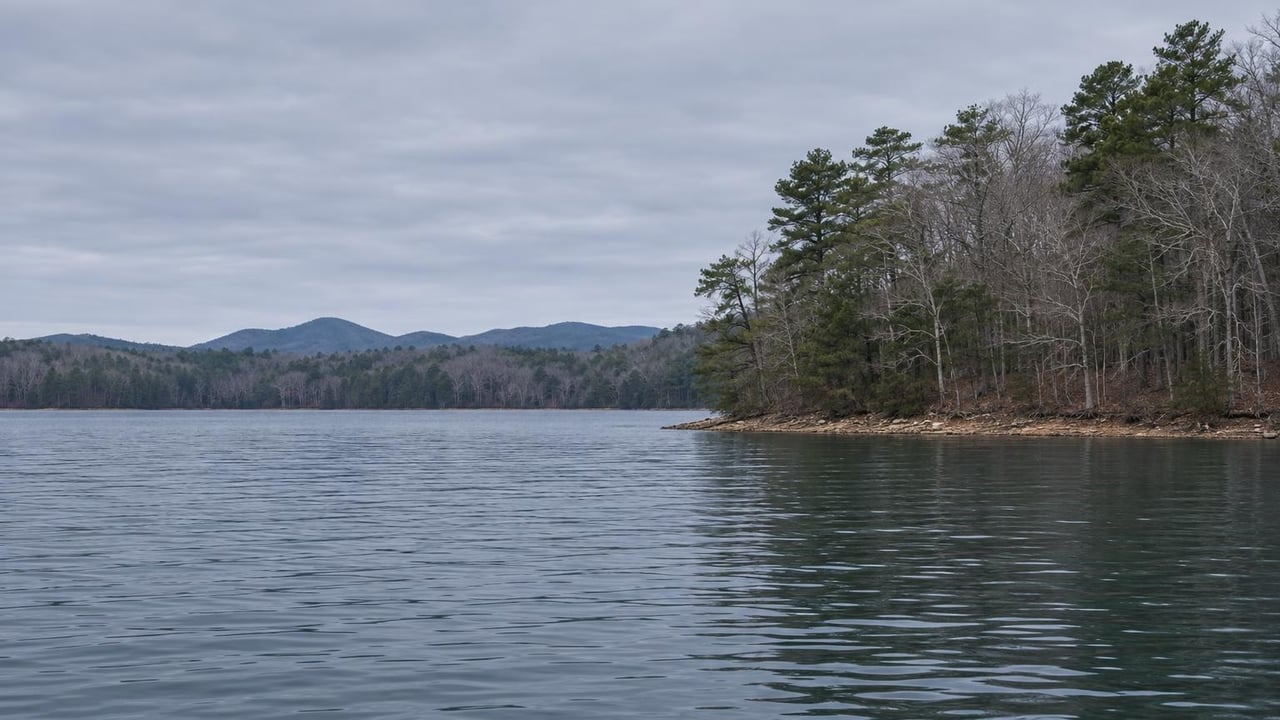
Where the Fish Are on Lake Blue Ridge This Winter
November 26, 2026
"Not long ago, Blue Ridge Lake was known as the last stronghold for lake-dwelling smallmouth bass in Georgia." That line opens the smallmouth section of the Georgia DNR Lake Blue Ridge fishing forecast, published June 18, 2026. Anyone who fished the lake twenty years ago remembers it that way.
The lake is at winter pool again. TVA's gauge at Blue Ridge Dam read 1,668.70 feet on Saturday, Nov. 21. The fish under that lower water are not the ones the lake was known for. Two species that someone moved here illegally changed the fishery, and Georgia DNR has rebuilt much of it since. One of those species, the blueback herring, now explains nearly every good winter bite on Blue Ridge. Find the herring and you have found the walleye, the Alabama bass and the rainbow trout DNR has stocked each of the last three winters.
Alabama bass came first. DNR's forecast says they were illegally introduced in the early 1990s, stayed scarce for years, then spread quickly in the mid-2000s and peaked in 2017. They now outnumber largemouth about 3 to 1. Smallmouth were once the most common black bass in the lake. They now make up less than 1% of the black bass community, even though DNR and U.S. Fish and Wildlife Service hatcheries stocked 290,000 smallmouth fingerlings from 2016 through 2023. The same forecast says Chatuge and Nottely, the neighboring mountain lakes, lost their native smallmouth the same way.
The blueback herring arrived around 2004. DNR says the herring eat the eggs and young fry of white bass and walleye. White bass were often the most common fish in DNR's gillnet samples in the late 1990s and early 2000s, and their numbers fell. Walleye had sustained themselves through natural reproduction for decades, but their spawning success dropped. By then the population was mostly older, larger fish, with few young ones coming up behind them.
DNR says there is no effective way to remove Alabama bass from a lake once they are established. So the agency worked with the lake as it now is. It stocked the native fish the herring were keeping from reproducing, and it added a predator that eats herring. Both efforts show up most clearly in winter.
DNR has stocked walleye fingerlings in Blue Ridge every year since 2017. The fall gillnet survey shows the result. Fall 2025 was the 40th straight year DNR biologists netted the lake, and they caught 8.3 walleye per net. The long-term average is 3.6, and the 2025 count ranks among the top five of those 40 years, according to the Georgia Wildlife fishing report of Nov. 21, 2025. Biologist John Damer wrote that the stocking "efforts have been hugely successful in reversing negative impacts of illegally introduced blueback herring." The same sample turned up good numbers of 8- to 10-inch walleye stocked that spring.
The adult fish have grown too. DNR's forecast credits a larger forage base, which in this lake means herring. Most walleye run 2 to 4 pounds, and some females reach 6 or 7.
Winter walleye on Blue Ridge sit deep, deeper than many anglers expect. In the Jan. 16, 2026 Georgia Wildlife report, Capt. Eric Crowley of Lake and Stream Guide Service had them at 50 to 65 feet. He recommended spoons, blade baits or a jig and minnow, fishing at low light, and moving on to find active fish. DNR's forecast says that by late winter they move to the deeper river ledges in the Toccoa arm, and as the water warms they come shallower to feed and spawn near the river mouth. It also says to fish much slower for walleye than for most other species and to favor dusk, dawn or after dark. Once that move began, the March 20, 2026 report suggested getting lures down to roughly 18 to 27 feet.
Yellow perch share some of that water. DNR describes Blue Ridge perch as few but big, 12 to 15-plus inches and over a pound, and points to deeper coves in the Toccoa arm with brush piles or channel ledges. Crowley called the perch bite inconsistent in his January 2026 report.
The other half of DNR's plan feeds on the herring directly. During the week of Nov. 17, 2023, DNR began stocking rainbow trout into the reservoir itself, not just the river. That first round was more than 8,000 fish from the Chattahoochee Forest and Lake Burton hatcheries. By Dec. 22, 2023, the count passed 10,000. By late January 2024, more than 13,500 catchable 10- to 12-inch rainbows had gone in that winter.
The Jan. 2, 2026 report covered the third straight winter of stocking, about 9,200 catchable rainbows. Crews from DNR Regions 1 and 2 and the Chattahoochee National Fish Hatchery moved the fish from trucks onto boats and released them in open water near Blue Ridge Dam. Damer wrote that the trout add variety and put "predatory pressure on the non-native blueback herring population." Both the first season's stocking, reported from November 2023 through January 2024, and the third season's, reported in January 2026, came during the months the lake sits at winter pool.
DNR's June 2026 forecast calls Blue Ridge the only large reservoir in Georgia stocked with rainbow trout, with more than 30,000 released in the main lake between the dam and Morganton Point Recreation Area over the previous two years. The fish averaged about 11 inches at stocking, and DNR expects some to reach 16 to 18 inches on a diet of herring. Fresh trout tend to stay shallow at first, so this is the one winter fish you can reach from shore. DNR suggests the Blue Ridge Dam Recreation Area, Lake Blue Ridge Marina, Lakewood Landing and Morganton Point, with inline spinners, small crankbaits or worms. Early and late in the day, it says, there may be some topwater action.
Below the dam, the Toccoa tailwater is a separate trout fishery that runs on TVA's generation schedule. We covered how it differs from the river above the lake in our post on the Toccoa's winter calendar.
Alabama bass are the species the lake has to live with, and in winter they follow the same bait as everything else. DNR's forecast says to look for schooling fish along steep bluff banks and over 50 to 60 feet of water that is holding herring. Its suggestions are Spot Sticker jigs, or a float and fly once the water drops below 50 degrees, and spoons or drop shots for fish you find on electronics. Anglers using live bait suspend large minnows or small trout above deep structure.
The average Alabama bass here weighs about a pound. DNR says 3- and 4-pound-plus fish are becoming more common as the population ages. In a report from GON Fishing Reports that DNR carried in its Jan. 16, 2026 roundup, guide Eric Welch of Welch's Guide Service fished rocky points, banks and brush with drop shots, Ned rigs, tubes, crankbaits, jerkbaits, jig-head minnows, A-rigs and the Float-n-Fly.
A few smallmouth are still out there. Some anglers have reported 12- to 16-inch fish in recent years, which suggests some of the stocked fingerlings survived. DNR says that in winter, the remaining smallmouth gather around creek mouths, where the water can run a few degrees warmer than the main lake.
TVA says the water level on Blue Ridge normally varies about 22 feet between summer and winter, and the TVA gauge already reads close to winter pool this week. At that level the water's edge sits farther out from most docks and coves, and the walleye, Alabama bass and herring are usually far below it. Our post on TVA lake levels on Lake Blue Ridge covers the lake's year from summer to winter.
For launching, the U.S. Forest Service lists Morganton Point Recreation Area as open yearlong, with a boat launch. The Forest Service also lists Lakewood Landing as yearlong but notes it may close because of lake level. Check before you tow the boat there in January. Our post on Morganton Point in the off-season covers what changes there after the summer crowds leave, and our rundown of boat ramps, marinas and access points covers the rest of the shoreline.
Some summer services close for the season. Lake Blue Ridge Marina's Boat Dock Bar & Grill is closed until April 2027, so pack lunch if you are fishing the marina bank. Blue Ridge Boat Rentals is closed for the season until March 19, 2027, so a winter morning on the water depends on having your own boat or fishing from shore.
A practical plan follows from all of this. Fish the bank near the dam or the marina for trout while they are fresh and shallow. Take the boat out at first light or dusk to the deep Toccoa arm ledges for walleye. Graph the bluff banks for herring for Alabama bass. Through March, DNR's reports put the best bite wherever the herring are.
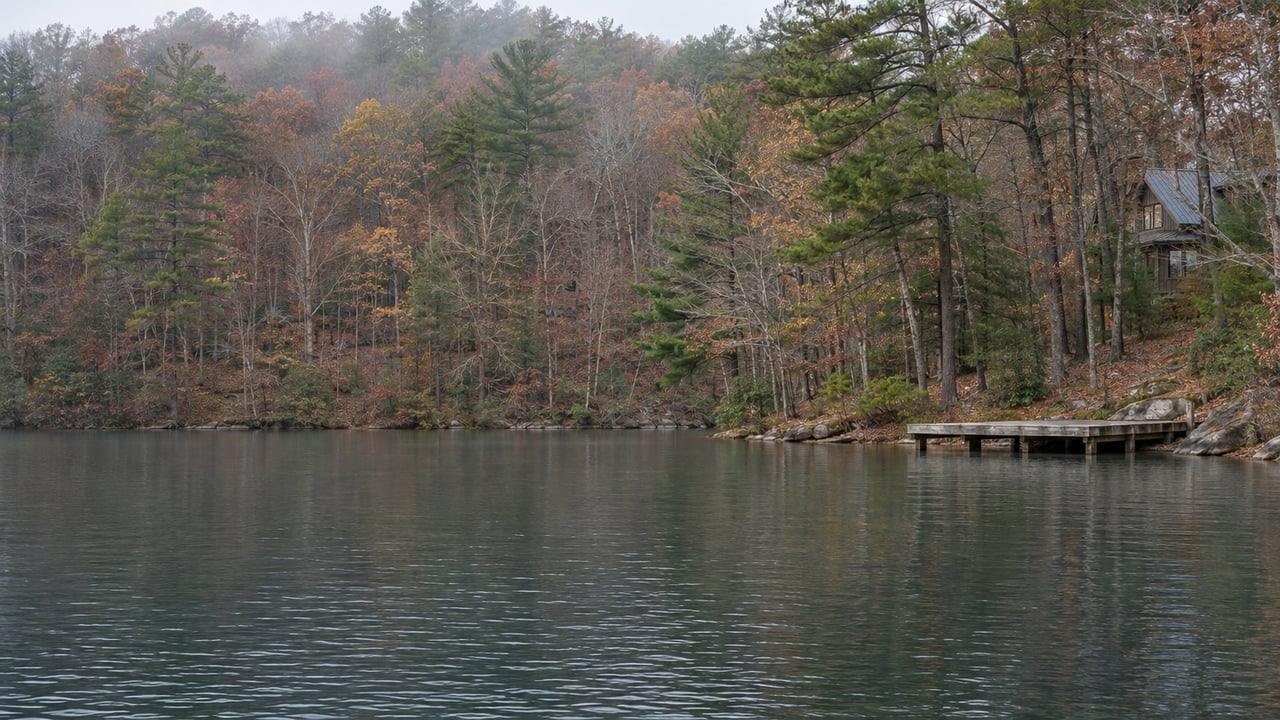
If you would like a home where the walk to the water is part of your winter routine, from a cove near the Toccoa arm to a lot within easy reach of Morganton Point, Kim Knutzen knows this lake season by season. Let me be your guide. Start your Lake Blue Ridge search.
Stay up to date on the latest real estate trends.
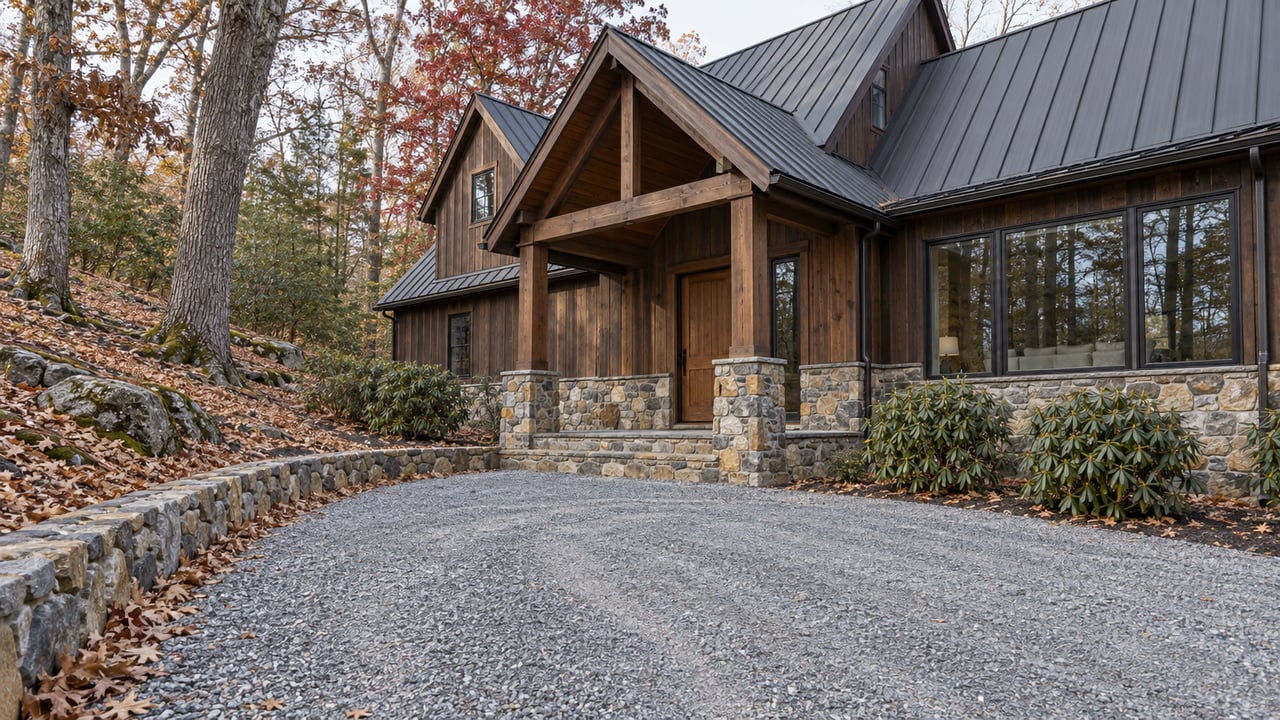
Knowing what buyers are looking for helps Kim with getting the seller's property ready for market. Whether you are looking to buy a second home or sell a rental investment property, Kim specializes in leveraging her local Blue Ridge expertise to get you top value.